
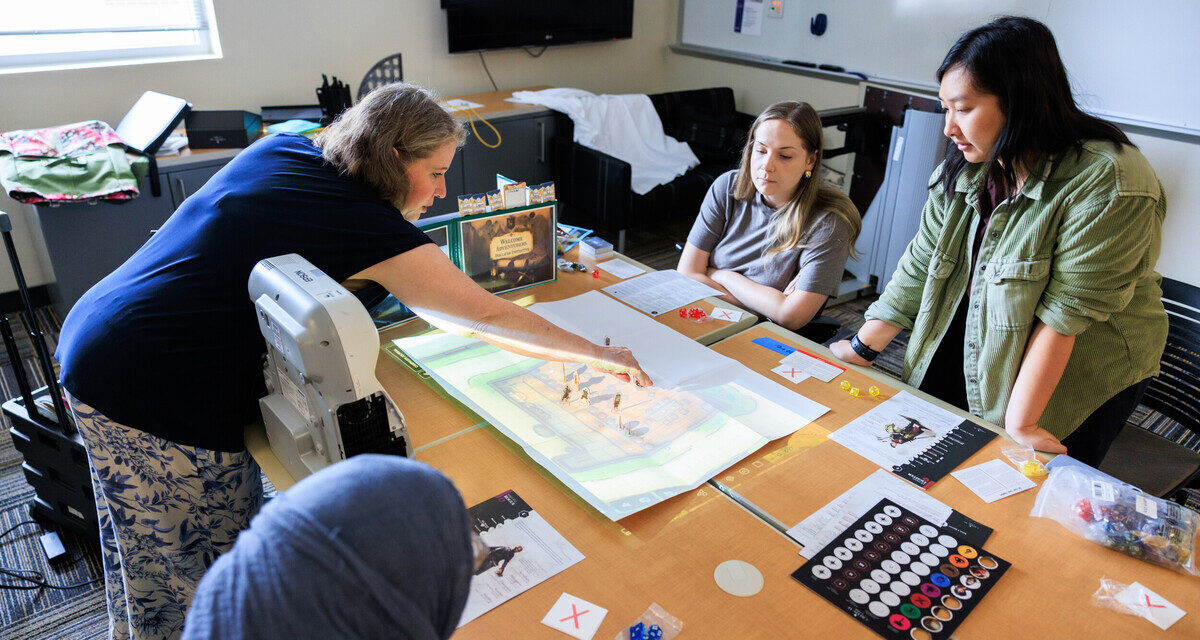
This fall, ACC Mental Health Counseling is introducing a new therapy group at the Round Rock C.A.R.E. Network Center that uses the popular, cooperative tabletop role-playing game Dungeons & Dragons (D&D) to help students build connections, strengthen social skills, and develop strategies for managing stress and anxiety.
Led by ACC Mental Health Counselor Mary Forrest-Wright, the group combines the cooperative tabletop role-playing game with facilitated discussion and therapeutic support.
“We often hear about the loneliness epidemic,” said Forrest-Wright, “and social isolation since the COVID-19 pandemic is very real. We have a whole generation of people who never got to practice connecting with others in a safe place.”
As a licensed counselor, Forrest-Wright found opportunities through D&D to give participants a structured environment to interact with others, experiment with different ways of communicating and problem-solving, and an opportunity to build confidence — all while playing the game.
“Plenty of people play D&D just for fun,” Forrest-Wright said. “What makes this group different is that a trained therapist runs the table. As the ‘Dungeon Master’ or ‘Game Master,’ I help create a safe place for everyone to enjoy themselves, learn new skills, and make friends without fear of being judged. And because it’s a therapeutic group, students’ growth will be supported and guided.”
How the Group Works
The group begins with a “session zero,” where participants establish expectations, boundaries, and confidentiality before beginning the game.
Each meeting includes approximately 60 to 90 minutes of gameplay followed by a 30-minute facilitated discussion Forrest-Wright calls “player aftercare.” During that time, students can reflect on situations that came up during the game and connect those experiences to real-life challenges, including stress, anxiety, communication, and interpersonal relationships.
No previous D&D or gaming experience is needed.
Who Might Benefit
The group may be a good fit for students who want to:
- Make friends and build stronger social connections
- Build confidence in a supportive environment
- Practice communication, collaboration, and decision-making
- Develop coping skills for stress or anxiety
- Try something new while connecting with other students
Faculty and staff who know students who may benefit from this type of experience are encouraged to share the opportunity with them.
The group will meet in person at the Round Rock C.A.R.E. Network Center from September 18 through December 4, with a possible break around midterms. Because this is a closed group therapy, it’s important for students who are interested in joining to know they are expected to participate for the full duration rather than attend on a drop-in basis.
Know a student who might be interested? Encourage them to complete this brief survey to attend a short online or in-person information session to learn more.