

As Austin Community College District’s (ACC) Architecture Program grows, its impact extends beyond the classroom, connecting students with opportunities to enter the profession. When Kit Johnson prepared to leave his position as Austin’s City Architect this summer, he took a moment to reflect on the role the program had played in his career.
As a former architecture adjunct faculty member, Johnson saw the program from inside the classroom. Later, as Austin’s City Architect, he saw firsthand the value ACC students bring to the profession. In a letter supporting the program, Johnson pointed to ACC students working in the City of Austin’s Office of the City Architect, noting that they bring “the broad and adaptive architectural education” needed to contribute to the office’s work.
For aspiring architects, ACC offers an accessible path into a profession that can be difficult to enter through traditional educational models.
Creating Opportunities Through Architecture
ACC’s Architecture Program provides students opportunities to build their skills, explore the field, and prepare for further academic study or careers in architecture. As the program grows, faculty are focused on creating a strong environment where students can develop and succeed.
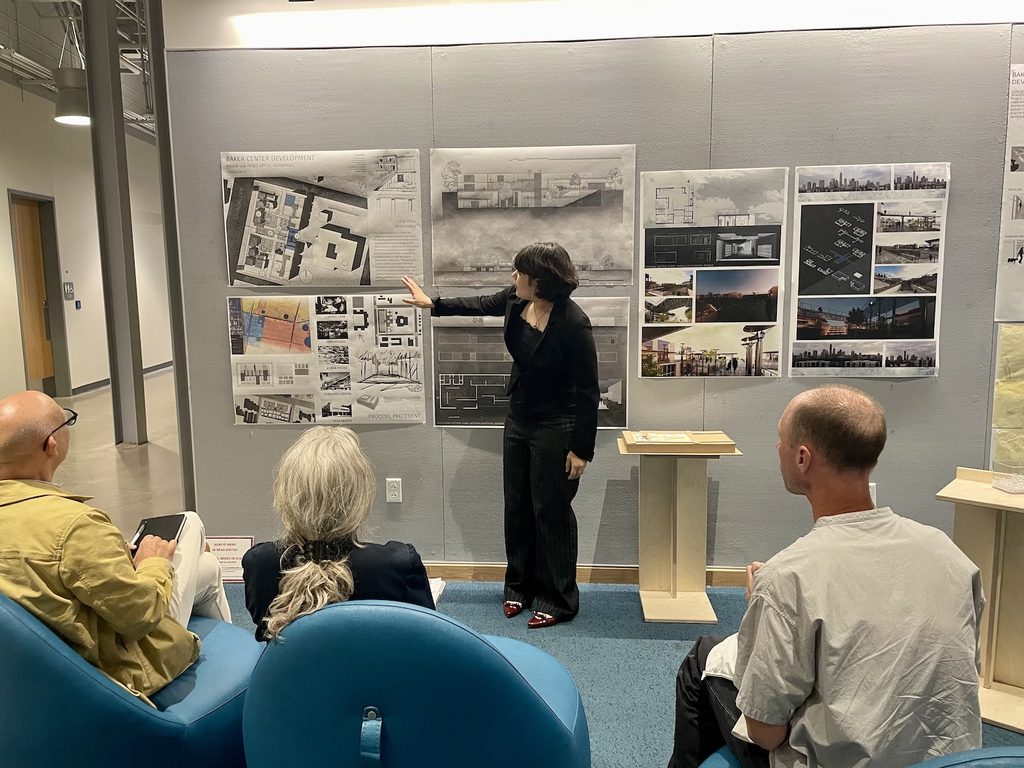
“Our program has nearly doubled in size over the past three years, growing from approximately 120 declared majors in fall 2023 to 255 in fall 2026, with classes now accommodating 418 students per semester,” said Morgan Slusarek, a full-time architecture faculty member. “That growth reflects the dedication of our faculty and the strong leadership in our department and division, as well as a culture where students collaborate, challenge, and support one another.”
Austin also gives ACC architecture students a unique setting for their studies, with opportunities to learn in a city known for its architecture and connect with professionals working in the field.
“Being centrally located in Austin also helps,” said Slusarek. “It puts our students close to notable architecture while connecting them directly with a vibrant, supportive professional community that is eager to engage.”
Johnson saw that in practice. He noted that Austin’s Office of the City Architect needs people who understand the full architectural process and can bring a range of spatial and graphic skills to their work. He pointed to ACC students helping “fill in gaps” in those areas while working in the office. Last year, student Julia S. interned with the City while completing her coursework at ACC, illustrating how students can apply their learning in a professional setting.
From ACC to What’s Next

For many students, ACC’s Architecture Program is a step toward continued education. Students have transferred to architecture programs at universities across the country, with the most recent transfers to schools across Texas, such as Texas Tech University, the University of Houston, the University of Texas at San Antonio, the University of Texas at Austin, and Texas A&M University.
ACC’s Architecture Program also gives students a clear understanding of the skills and perspectives they need for what comes next in their journeys.
“No matter whether they choose to transfer to a university or directly join the workforce, we teach them ways of seeing, thinking, and making space,” said Slusarek. “When students complete our program, they have an accurate picture of what a future in the design world would look like.”
Looking Ahead
As the program continues to grow, faculty remain focused on strengthening the student experience and connections with the architecture profession. By giving students opportunities to directly experience design and connect classroom learning to the world around them, the program helps more students see themselves pursuing careers in architecture.
Johnson echoed that broader potential in his letter, writing that ACC’s Architecture Program can encourage students who have traditionally been excluded from architecture schools “to embrace their role in shaping our city and region.” He encouraged the College to continue supporting and investing in the program, writing, “Our city and our profession truly needs the growing number of students emerging from the program.”
That sense of access and possibility is also central to how Slusarek views ACC’s role in architecture education.
“By removing barriers to the practice of architecture and helping our students experience design, we open the door to a range of opportunities,” said Slusarek.
Contributed by Academic Affairs Communications