
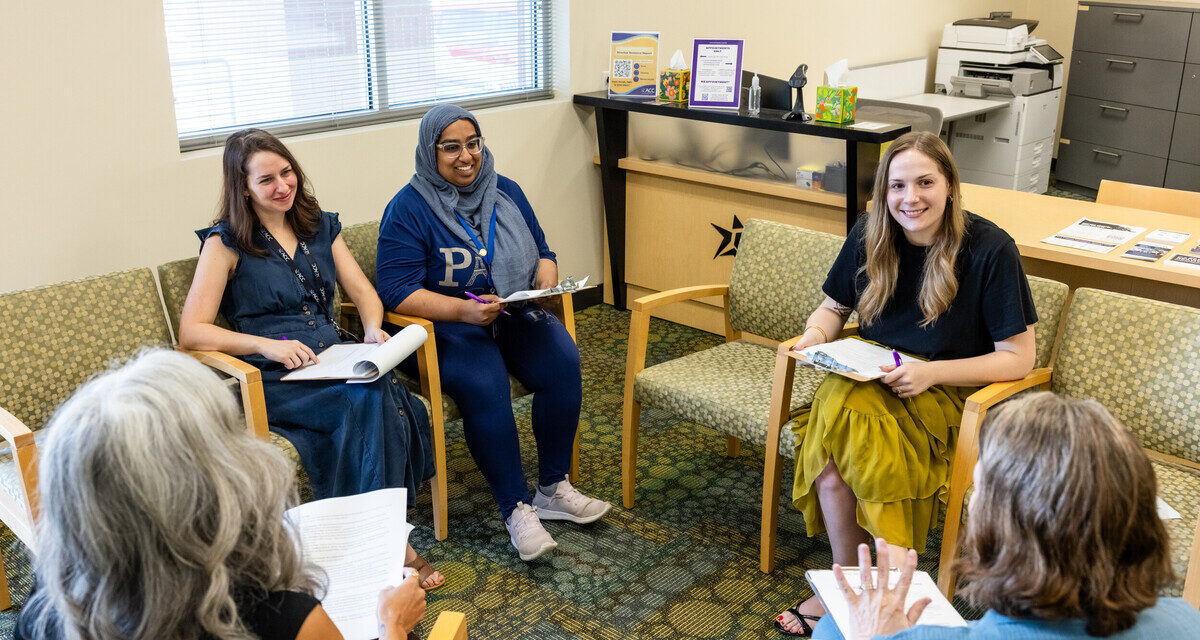
In today’s high-inflation economy, unexpected expenses and a rising cost of living can be a breaking point for a student trying to balance finances and education. Austin Community College District’s (ACC) Basic Needs Systems (BNS) has taken an approach that recognizes access to food, housing, childcare, mental health support, and more is essential to the College’s mission: helping students stay enrolled and move toward their goals.
Basic Needs Systems completed its first full academic year to address these critical needs, and the results are in. The Year One Impact Report, covering the 2025-26 academic year, reveals incredible results. Students who used Basic Needs services had a fall-to-fall persistence rate 7 to 27 percentage points higher than the College’s overall fall-to-fall persistence rate of 57 percent. Explore highlights from the first year in the Basic Needs Year One Impact infographic.
Year One at a Glance
- Food access: Riverbat Bites expanded from one pantry to 11, serving 11,362 students. Students accessing groceries persisted at 72 percent — 15 percentage points above ACC’s Collegewide average.
- Emergency aid: Nearly $683,000 in emergency aid supported 1,348 students facing financial crises, with housing, utilities, and transportation leading requests.
- Student advocacy: C.A.R.E. Network staff supported 3,199 students across 5,091 requests for assistance. Students receiving services persisted at 67 percent — 10 percentage points above average.
- Childcare: Childcare scholarships helped 192 parenting students balance education and family responsibilities, and a partnership with Workforce Solutions Capital Area connected an additional 341 students with support.
- Mental Health Counseling: Counselors served 765 students across 4,231 visits. Students using mental health counseling persisted at 77 percent — 20 percentage points above average.
- TimelyCare virtual mental health support: TimelyCare provided 664 visits for 84 students. Students using the service persisted at 84 percent — 27 percentage points above average.
Building a Coordinated System of Care
Behind these numbers is an approach built around personal connection. Staff help students identify resources, navigate applications, and work with students in a case-managed approach to help them develop plans for long-term stability.
“Asking for help can be difficult for some students, especially when they feel they should be able to handle everything on their own,” said Cara Crowley, Special Advisor to the Chancellor for Basic Needs. “We want students to know there is support available at ACC, and they don’t have to wait until a challenge becomes a crisis to get help navigating it.”
The report also emphasizes listening to students before challenges become a reason to leave college. The College piloted a Student Basic Needs Questionnaire at Highland and Round Rock campuses to help identify students facing serious barriers, including homelessness, before those barriers posed a challenge to their persistence. Staff proactively reached out to students to share information about resources that can help them stay enrolled, complete their credentials, and build the skills that the Central Texas workforce needs.
Connect Students to Basic Needs Support
Faculty and staff play an essential role in this effort by making students aware of these resources and referring students to the C.A.R.E. Network.
“You don’t have to know every resource or have all the answers to help a student,” Crowley said. “Start by listening and letting them know support is available. Connecting them with the C.A.R.E. Network with a quick referral gives our team an opportunity to address their needs.”
Employees can download the C.A.R.E. Network Faculty/Staff Toolkit for ready-to-use classroom scripts, syllabus language, a short presentation on Basic Needs services, and frequently asked questions.