
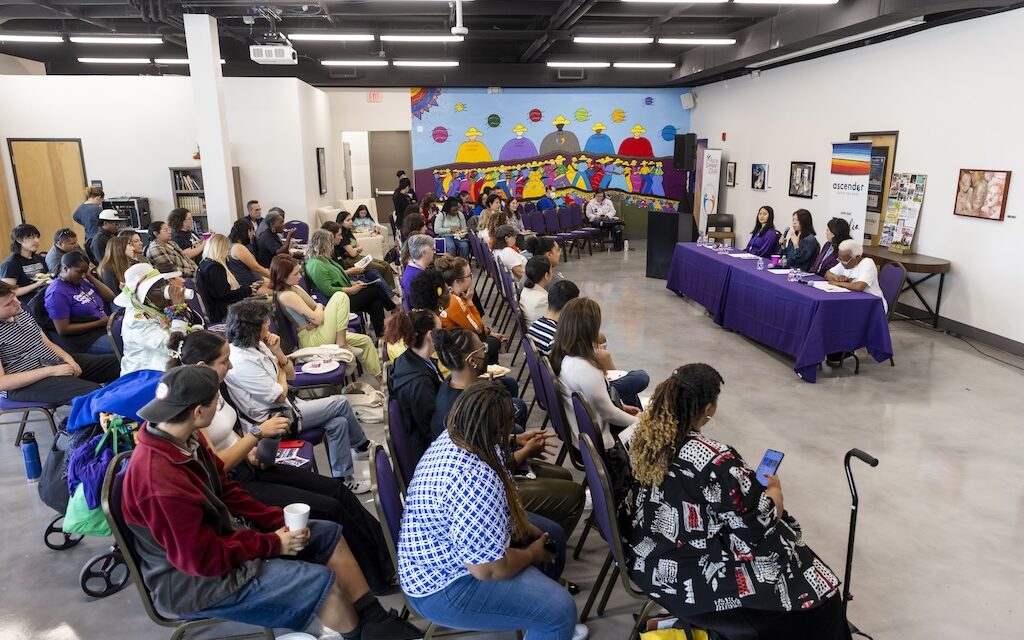
Beginning November 1, Austin Community College’s (ACC) cultural centers, currently housed within the Office of Belonging and Purpose, will transition to Academic Affairs.
The transition follows the upcoming retirement of Vice Chancellor of Belonging and Purpose Larry Davis and will more directly connect the centers with ACC’s academic mission, including curriculum, teaching and learning, faculty engagement, and student success.
“We are so excited to bring the centers into the Academic Affairs fold, where we can build on their good work and expand their direct ties to curriculum and student learning,” Vice Chancellor of Academic Affairs Dr. Gaye Lynn Scott said. “These centers will be essential to the work we do going forward to ensure that our broad and diverse student population develops the dispositions and skills to thrive in our pluralistic workplaces and communities.”
The new structure will create stronger connections between the centers and academic programs while providing a consistent support framework within Academic Affairs. The centers will continue their work supporting learning, dialogue, engagement, and community across ACC.
College and Academic Affairs leaders are working with center directors to finalize reporting processes, administrative support, and other operational details ahead of the transition.
Connecting the Centers to ACC’s Academic Mission
ACC’s cultural centers contribute to the College in ways that extend beyond programming and events. Their work creates opportunities for students, faculty, and employees to engage with history, culture, scholarship, community, and contemporary issues.
Bringing the centers into Academic Affairs creates additional opportunities to connect that work with curriculum, faculty expertise, student learning, and academic programs across the College. Aligning the centers with specific academic areas can also support new partnerships and collaboration among center leaders, faculty, and students.
In the coming months, ACC will share more about each center, its leadership and mission, and ways students, faculty, and employees can engage with its work.