
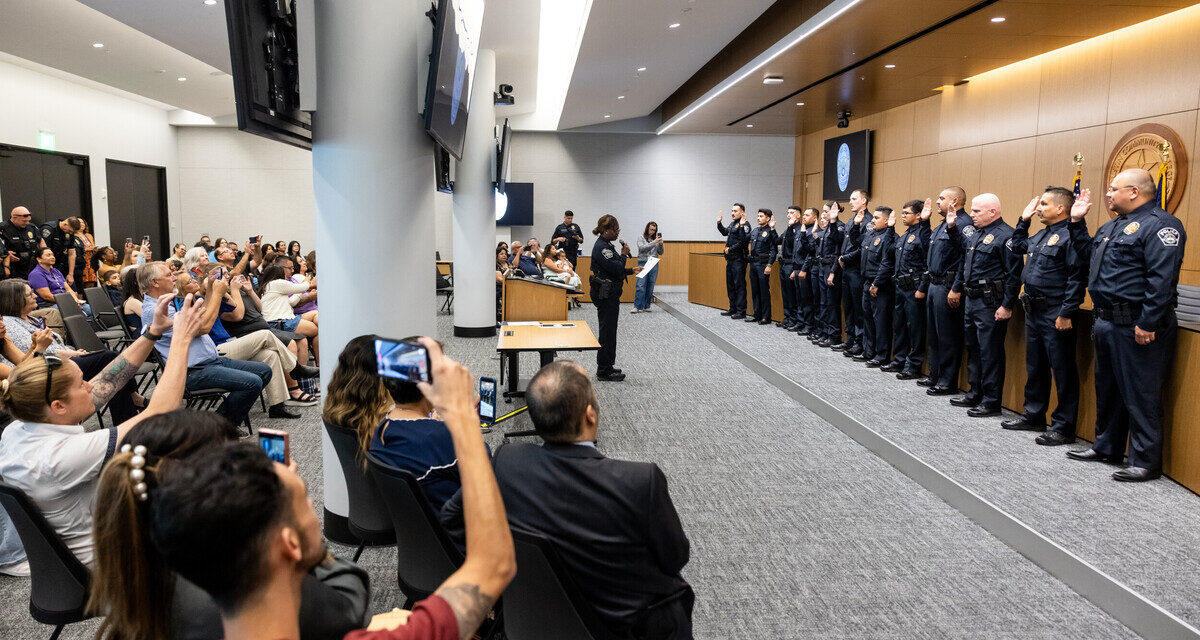
Austin Community College District (ACC)’s first Police Department cadet class was officially sworn in on March 25, 2026. Now, as these officers transition into months of rigorous field training, we wanted to learn more about the people behind the uniform and the purpose that drives them.
We sat down with four of ACC’s newly minted officers: Daniel Buentello, Gabriella D’Angelo, Tyler Le Garde, and Marco Cruz. Each brings a distinct set of strengths to the department—from deep-rooted family legacies within ACC and previous higher-education experience to impressive academic achievements and strong leadership backgrounds.
Read on as they share their personal journeys to the badge, the most challenging moments of their academy training, and how their unique pasts are shaping the kind of officers they strive to be for the ACC community today.
Tyler Le Garde
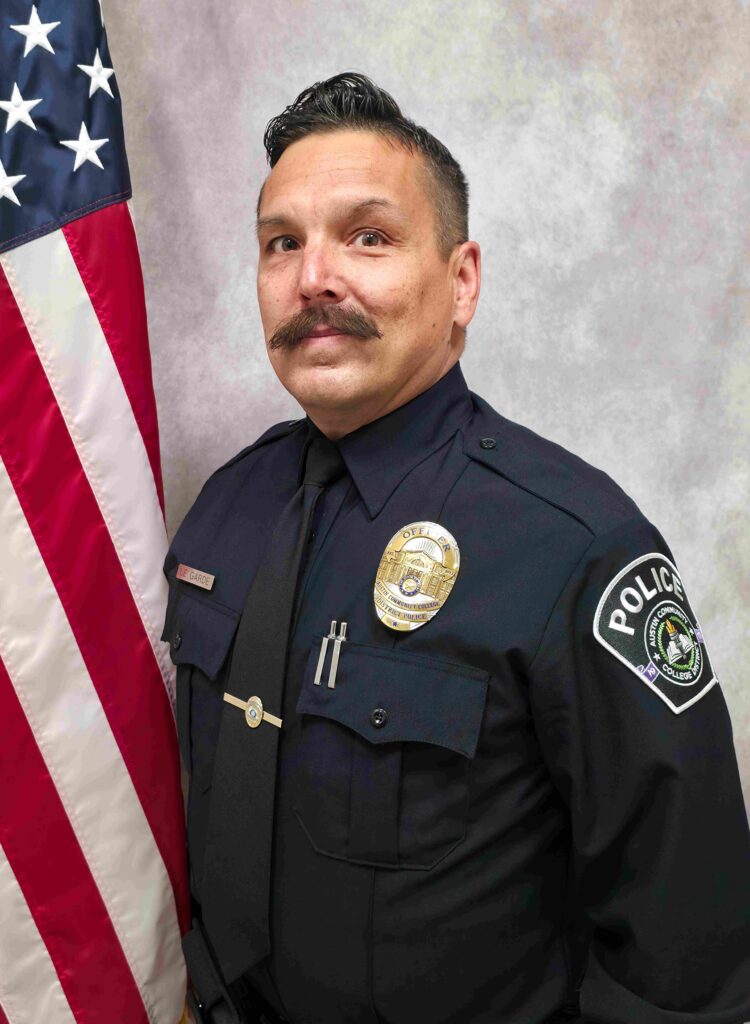
Prior to joining ACC, Officer Le Garde was a cadet with the Austin Police Department. After a training injury, he was reassigned to Communications within the department. He previously served as a patrol deputy with a sheriff’s department in Minnesota.
How did you find out about the opportunity to join the ACC Police Department’s first cadet class?
I was at another agency, looking at re-entering the academy, when I came across ACC’s Bats to Badges Program. Once I saw it had opened to external applicants, I found more information on the website and decided to go for it. It stood out right away as something a little different.
What interested you the most in becoming a police officer, and specifically for ACC?
I spent a number of years in the private sector and felt pulled toward doing something that matters. More than that, I wanted to do the job the right way in service to our community. ACC stood out because of its focus on community policing, student support, and a more thoughtful approach to the work. It’s a place where communication, discretion, and crisis intervention aren’t just training concepts or talking points—they’re part of the day-to-day. That lined up with how I want to serve.
What was the most challenging part of training?
I was challenged in a lot of ways, but one thing that stood out was endurance. Not just physical, but mental and emotional, too. The academy has its ups and downs, and keeping an even keel through all of it—while keeping your focus where it needs to be—was tougher than I expected.
Share a memorable moment from the academy experience.
My first academy experience didn’t end the way I wanted it to, and that stayed with me. This time around, I made a point to slow down and take in the experience a little more. What sticks with me most is watching a group of strangers come together, put in the work, and come out the other side as a team I’m proud to be part of.
Is there anyone (at ACC or otherwise) you would like to thank for helping you through training?
A lot of people played a part. The department made it clear we had support behind us—and that was, and is, a good feeling. My fellow ACC cadets (now officers!) were a big piece of it, too. I don’t think they all realize how much of a role they played in helping me through the training. And, on a personal level, my family carried more than their share behind the scenes.
How does your previous experience with the Austin Police Department make you a better officer?
Working in communications gave me a new perspective on the job. I saw how calls come in, how information gets passed along, and how quickly things can shift before an officer ever arrives. It also meant working with people from all kinds of situations, which reinforced how important communication, patience, and understanding really are. That’s something I carry with me. I want to be the kind of officer people feel comfortable talking to, whatever the situation is.
Gabriella D’Angelo

Before joining ACCPD, Officer D’Angelo, age 24, was a dance teacher and manager at Mygym Austin, where she taught fitness classes to all ages. During that time, she completed her master’s degree at Loyola University New Orleans.
How did you find out about the opportunity to join the ACC Police Department’s first cadet class?
At Austin’s career expo. I learned about the opportunity to be in the first ACC cadet class and the family lifestyle that ACCPD provides, which resonated with me. At the career expo, I heard about the many benefits of ACCPD and learned that the officers continue to learn and train, which I loved.
What interested you the most in becoming a police officer, and specifically for ACC?
What interested me the most in becoming a police officer was to serve my community and work with victims. More specifically, I loved my college experience, but I also know that it is a challenging time for many. I wanted to help college students get the education they work hard for safely. I also want to help victims at the College and be a friendly face that students can feel comfortable coming to if they ever need assistance.
What was the most challenging part of training?
For me, the most challenging part of training was the very end of the academy. We took three-hour tests twice a day for almost two weeks leading up to the big Texas Commission on Law Enforcement (TCOLE) exam. That was exhausting mentally; however, it was all worth it once I passed the TCOLE on my first attempt.
Share a memorable moment from the academy experience.
The most memorable and painful experience from the academy was the day we got pepper-sprayed. It was a truly awful feeling to get sprayed. However, it brought the cadets together as we bonded over our pain, laughed at all of our reactions, and helped each other decontaminate with water, fans, and lots of popsicles.
Is there anyone (at ACC or otherwise) you would like to thank for helping you through training?
One person I would like to thank for helping me throughout training is fellow rookie Officer Wells. Officer Wells and I became quick friends throughout the academy, and she was my biggest supporter. She was always there to cheer me up or motivate me when we faced challenging tasks. She also inspired me by her determination and willingness to go first in training, even when we weren’t quite sure how to do the tasks yet. I truly couldn’t imagine going through the academy without my best friend.
How does your educational background make you a better officer?
I think my educational background makes me a better officer because I am a quick learner and am always open to feedback. I constantly want to improve through learning from veteran officers or taking different training courses. My education taught me about discipline, hard work, and determination. It has also helped me with my report-writing skills.
Daniel Buentello

Officer Buentello, 26 years old, worked at the Round Rock Campus ACCelerator as an assistant before joining the department. He helped students register for classes, provided Wi‑Fi support, and set up classes for professors.
How did you find out about the opportunity to join the ACC Police Department’s first cadet class?
I heard about this opportunity through Alisol Martinez in ACC’s HR Department.
What interested you the most in becoming a police officer, and specifically for ACC?
I’ve wanted to become a police officer ever since I was a kid. I chose to stay with ACC because working for the College has allowed me to continue my education through the Bats to Cats program and transfer to Texas State University. I also have family members who work at ACC, and their support has meant a lot to me during this new chapter. Having the opportunity to help keep our faculty, staff, and students safe on our campuses is truly an honor.
What was the most challenging part of training?
The most challenging part of the academy was the academic portion.
Share a memorable moment from the academy experience.
The most memorable part of the academy was the friendships I made. Over the 7½ months we spent together, our class became incredibly close, and those relationships are something I’ll always value.
Is there anyone (at ACC or otherwise) you would like to thank for helping you through training?
I’m grateful for the support I received throughout the academy. My entire command staff was supportive, as were all 12 of the fellow officers who trained alongside me. Their encouragement made a huge difference.
How does your previous experience working at ACC make you a better officer?
Working in the ACCelerator before joining the department showed me how important our students are and how much they rely on us. Many students would come in stressed about tests or finals, and we always tried to help ease that stress. Seeing them return the next day to share that they passed their exams made us incredibly proud. ACC truly is for everyone, and I can’t think of a better place to work.
Marco Cruz
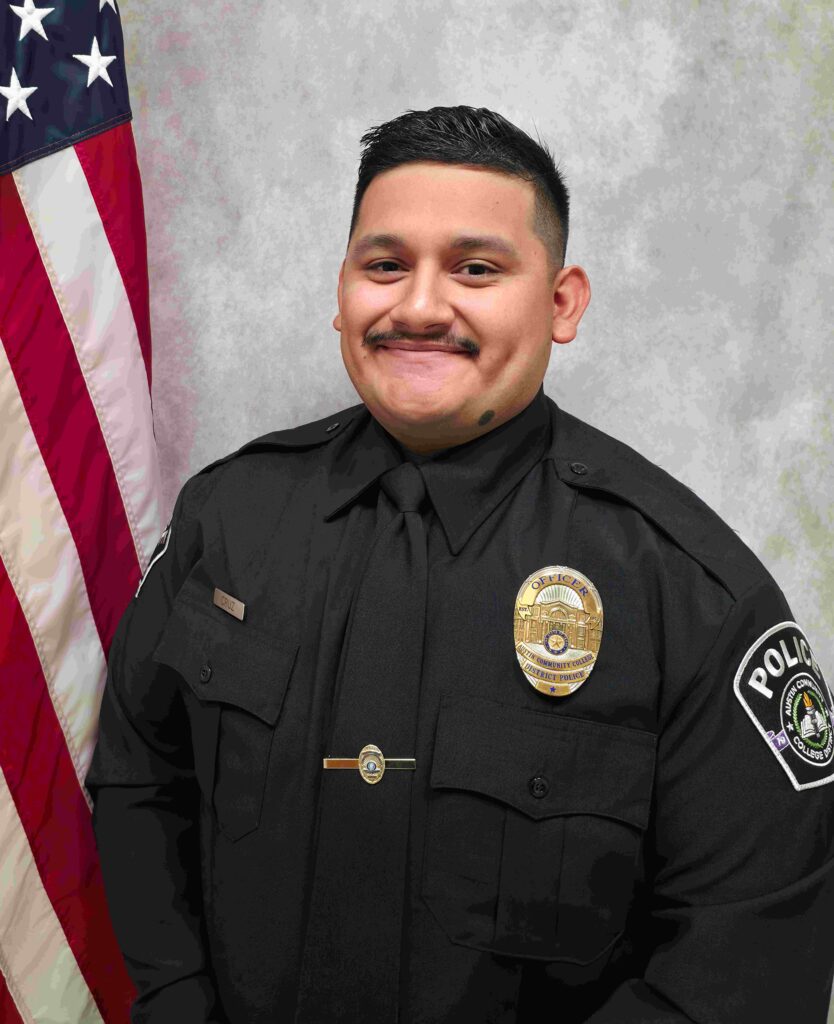
Officer Cruz, age 27, previously worked for the Williamson County Sheriff’s Office as a Corrections Officer before coming to ACC.
How did you find out about the opportunity to join the ACC Police Department’s first cadet class?
I found out about this opportunity through my dad, who is an officer with the Austin Community College Police Department.
What interested you the most in becoming a police officer, and specifically for ACC?
I have always wanted to become a police officer since I was a kid. My dad was first with the Department of Public Service Texas Highway Patrol, and I got to see and meet amazing officers. They all told me their experiences and what they got to assist with around the State of Texas. Being able to see my dad pack up his gear to go and help out others for weeks at a time when hurricanes caused great devastation to the eastern part of Texas had a big impact on me, because it showed that we have a role in helping and impacting many in this world.
I want to make a difference by giving people positive interactions and assistance in any way possible. I can do that here at ACC, which has people from every walk of life, at all different levels of their lives. We can make a difference with youth, who are starting their futures, through positive interactions and possibly guidance to help them in any struggle—no matter how little it might be. They leave ACC with a positive attitude of not only staff but law enforcement as well, which then goes with them to the future.
What was the most challenging part of training?
The most challenging part of training was the academic portion of the academy. Having to read so much material in very small learning blocks was very stressful. This was a new style of learning for me.
Share a memorable moment from the academy experience.
The most memorable moment for me was seeing everyone get sprayed with pepper spray. From the biggest person to the smallest of people in our cadet class, we all struggled and fought back the pain of the pepper spray as a team. I loved being able to bond in pain and laughter of seeing our fellow cadet hoot and holler, completing an obstacle course with tears running down their faces. Days like those are what made our cadet class bond great.
Is there anyone (at ACC or otherwise) you would like to thank for helping you through training?
I would love to thank my wife for helping me out at home with cooking meals, helping me prepare for class, and assisting me with long nights of studying and test prep. All my fellow cadets played a role in cheering and encouraging me while in the academy, but Alfonso Rosado, Chris Martinez, Whitney Piper, Tyler LeGarde, and Daniel Buentello played such a large role while at the academy. I can’t thank them enough for always pushing me academically and physically on a daily basis. They showed the definition of teamwork and never leaving a man behind.
What qualities do you hope to emulate from your father in your new role?
His hard work and drive to always find ways to improve. His fellow officers always relayed to me how much they enjoyed being under my dad’s command. He was someone who had a strong work ethic, positive attitude, and was never afraid to get his hands dirty and help with whatever they needed. He is someone I am proud to have as a father and who I can work alongside.