
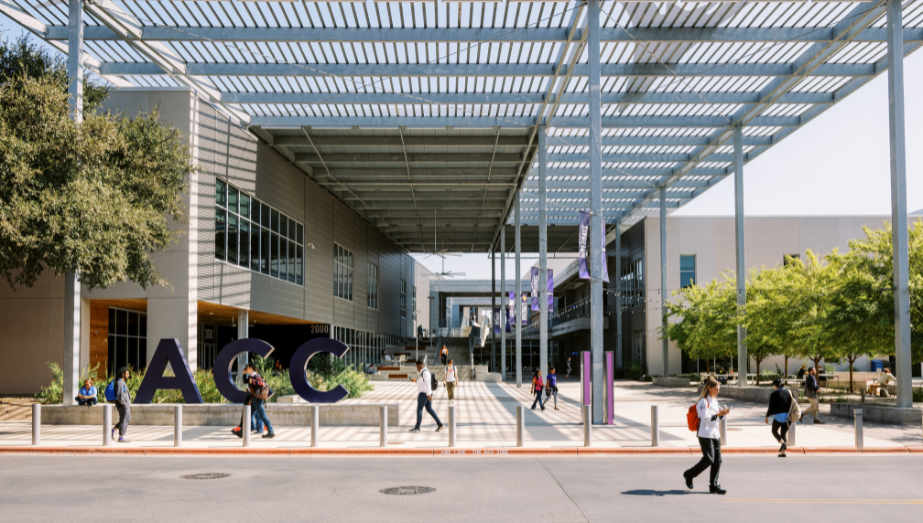
Last semester, Austin Community College District (ACC) announced the launch of the Intersectionality Center, a new academic hub designed to deepen the College’s approach to student success and community engagement. By focusing on the unique and overlapping lived experiences of our students, the Center aims to address the opportunity gap and foster a greater sense of belonging across the district.
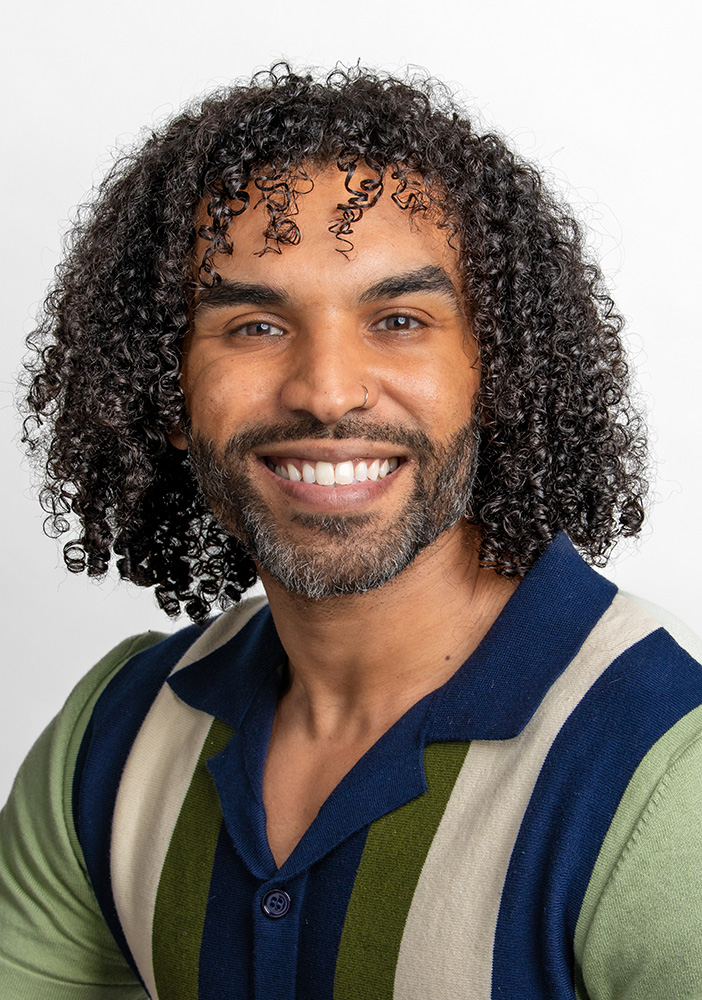
Leading this work is Dr. Tomas Boatwright, a faculty member in the Student Development Department. An experienced associate professor and qualitative researcher, Tomas brings years of broad teaching and student affairs experience across K-12 schools, universities, and nonprofit organizations. With research and scholarship focused on intersectional analysis, their research agenda is concerned with two primary inquiries: youth and community engagement.
We asked Tomas some questions to learn more about the Center and to discuss the path forward.
The term “intersectionality” can be new to some. Can you share a practical example of how you see intersectionality playing out in the life of an ACC student?
Intersectionality is an analytic lens that allows for understanding a subject from a multitude of dimensions. In that understanding, we may discern the qualitative differences between and within.
A practical example of intersectionality can be conceptualized in the difference in use of health, academic advising, and academic support services among college students. While all college students underutilize those supportive services, data show that first-generation college students seem to underutilize those services far more than their continuing-generation peers.
Strategies to support greater engagement with these services have to take into consideration that first-gen college students may benefit from early and more consistent awareness of these services.
Could you share with us the origin story of the Intersectionality Center?
The Intersectionality Center is a response to institutional data and insights from students and staff on belonging at ACC. It is also a response to the historic changes in the U.S. educational system that put into focus achievement disparities and access. Those challenges overlap with growing national concerns over economic insecurity and the political divide and are uniquely tied to local Texan community college students’ struggles with finances, mental health, and meeting basic needs. Now, more than ever, communities need community colleges like ACC to innovate their approaches to promoting access and addressing educational disparities.
In its capacity as an academic center, the Intersectionality Center seeks to address Austin’s opportunity gap and the variety of barriers to student success. It does this by advocating for deep, multidimensional analysis, making the classroom experience more relevant to the community’s unique lived experiences, and addressing the safety concerns that burden student success.
What do you hope will be the Center’s primary contribution to the College and our students in its first year?
The Intersectionality Center is poised to contribute to the intellectual discourse at the College through its instructional programming and emphasis on interdisciplinary and interdepartmental collaboration. I plan for the Center to be deeply engaged with faculty instructional and pedagogical practices while also showcasing student knowledge production and contributing to the deepening of students’ critical thinking skills. And in general, during its first year, the Center will be a safe space for all students, including those who are considered underserved.
How will the Center’s work directly support ACC’s strategic goals?
I am already in conversation with a variety of programs and departments doing important access work at the college. I plan for the Center to collaborate with others at the College who are already promoting access and addressing educational disparities. This will also involve attributing an intersectional lens to understand the nuance of those educational disparities.
You mentioned a Faculty Council that will “shape curricular strategies.” Could you elaborate on what that might look like?
Members of the faculty committee will provide valuable insight into the life of an ACC student, including what navigating the College’s systems and departments is like. They will work together with me to generate strategies for making the College a place where all feel a sense of belonging. We’ll get there by asking different questions about our teaching and the College’s culture. All professors, regardless of whether they participate in the committee, can expect the Center to offer opportunities to reflect on their teaching practice.
What kind of professional development opportunities do you envision for faculty and staff?
The Center will host informational sessions that offer an in-depth exploration of topics and issues impacting student persistence and belonging. It will also seek to illuminate a variety of resources in the city that may benefit faculty and staff’s work with students.
How can staff members partner with the Center to better serve students?
The Center will organize an advisory committee where staff and students can provide their valuable insights regarding supporting students’ persistence and cultivating a sense of belonging.
How will students be involved with the Center?
Students must and will be involved in the Intersectionality Center. The Center will host programs and activities that center the student voice, which will influence the kinds of persistence-promoting programs that the Center will organize. There will also be space on the advisory committee for student representation. I also hope to hire student workers in the near future.
Could you tell us more about the physical space for the Center?
The specific aspect of the Center’s physical space is still developing. The Center is likely to be located in Highland Campus in the near future.
The Center has been “grounded in institutional research.” What key performance indicators (KPIs) or metrics will be tracked to measure the Center’s impact on student success and belonging?
Student satisfaction, student engagement, retention rates, and persistence rates.
What are the next steps for the Center?
The next immediate steps for the Center involve hiring a program coordinator and continuing to build relationships across the College.
Looking ahead five years, what is your ultimate vision for the Intersectionality Center at ACC? What legacy do you hope it builds?
The Truman Commission Report in 1947 called for the establishment of a network of public community colleges that would charge little or no tuition, provide cultural centers, serve the local areas in which they served, and offer a comprehensive curriculum. The Commission, in essence, called for equality of opportunity for all and for a massive expansion of higher education in America.
In 1960, the W. K. Kellogg Foundation announced a series of grants to be used to establish university centers to train and educate community college leaders. This important step in the evolution of the community college helped to lend credence to the community college effort. The comprehensive community college model was created.
Looking forward, the ultimate vision for the Intersectionality Center is to be a grounded ACC institution that is known for its innovative and intellectual programming that stimulates critical thinking and a greater sense of belonging among all members of the ACC community. I hope to illuminate the brilliant work and knowledge of students, staff, and faculty, while also making clear and strengthening connections with area community-based organizations and the many resources available in our service area.
How can employees who are excited about this work get involved right now?
Any employee who is excited about the work should reach out to [email protected]. Additionally, please look out for an application to participate in the faculty or advisory committee. I look forward to partnering with you.